Insight
Radar and pressure tide gauges: what each one measures
A radar sensor reads the sea from above and a pressure sensor reads it from below. Here is how they differ.
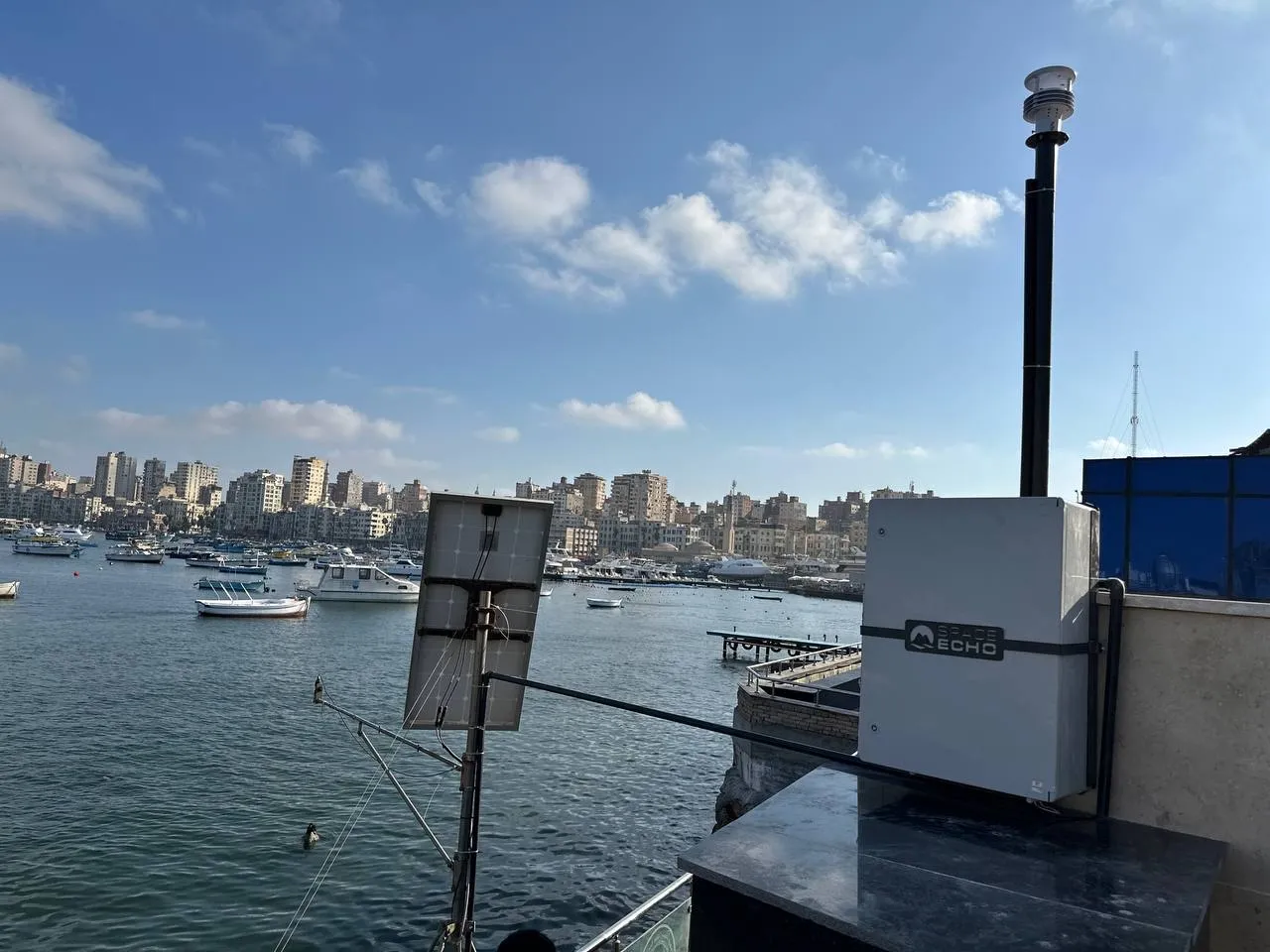
Radar and pressure tide gauges: what each one measures
A tide gauge can read the sea from above or from below. A radar sensor sits dry over the water and measures the distance down to the surface. A pressure sensor sits under the water and measures the weight of the water above it. Both give sea level; they differ in what they need on site and in what can throw them off.
Radar: reading from above
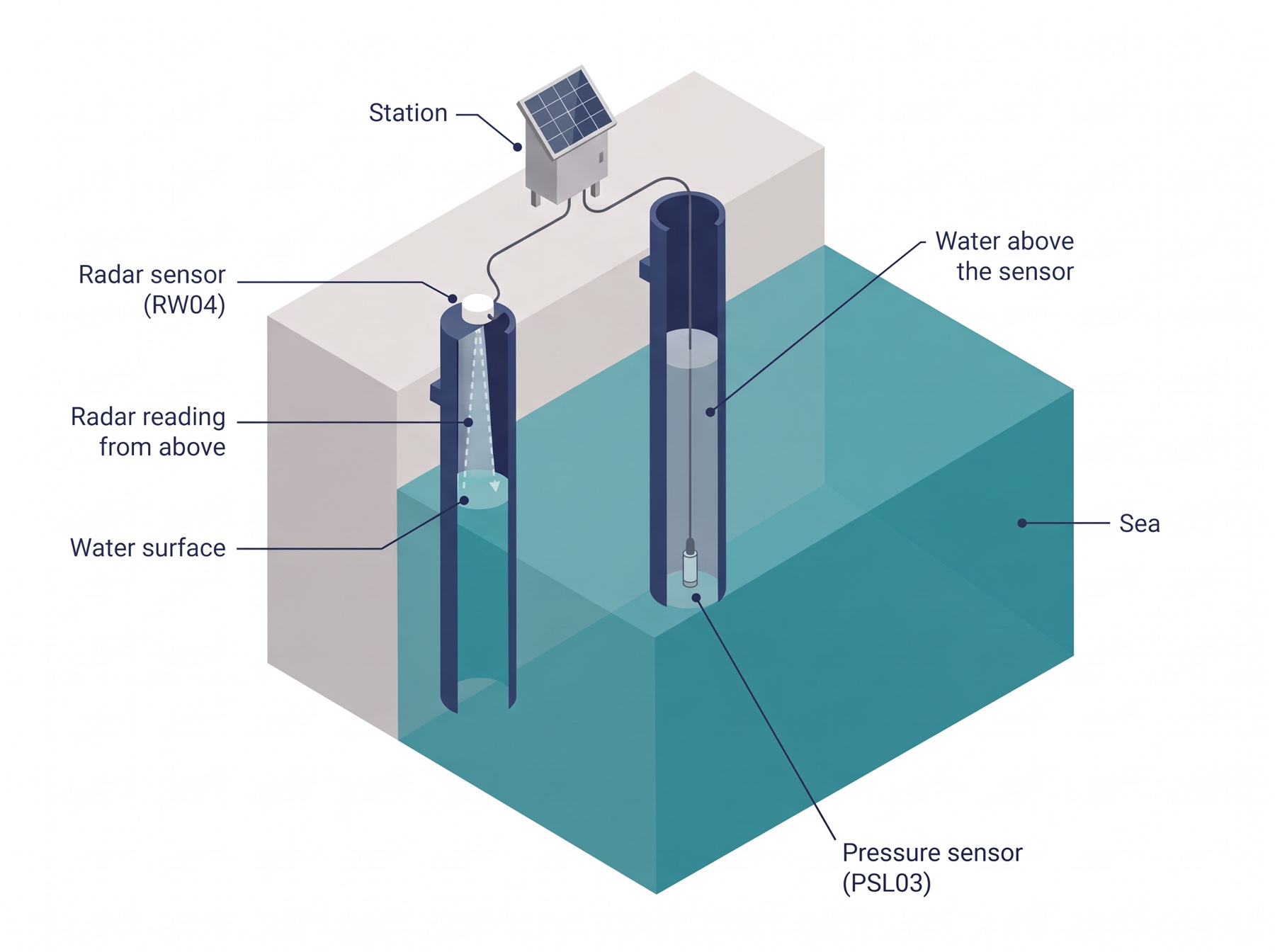
The Radar Level Sensor sends radar waves down a sounding tube. They reflect off the water surface, and the sensor calculates the distance. Nothing touches the water, so marine growth does not reach the sensor. Its accuracy is ±2 mm over a range of 0.1–40 m, and the reading does not depend on air temperature or humidity. It needs a mount above the water with a clear path to the surface.
Pressure: reading from below
The Piezometric Level Sensor sits under the water and converts static pressure into a level. It is made from PTFE with a ceramic chip for seawater, comes in 0–5, 0–10 or 0–15 m ranges, and its cable length is chosen for each site. Nothing is mounted over the water: only the cable leaves it, and fog, spray and foam on the surface do not affect the reading.
Its accuracy is ±0.2 % of full scale, so the error depends on the range chosen: ±10 mm on 5 m, ±20 mm on 10 m and ±30 mm on 15 m. The reading also depends on the density of the water above the sensor, which changes with salinity and temperature. And because the probe sits in the sea, it needs cleaning and regular checks against a reference level.
Which one to choose
- Radar — where a mount over the water is possible and millimetre accuracy matters, as in long sea-level records.
- Pressure — where nothing can be mounted over the water, or a cable is all the site allows.
- Both — on the Mediterranean stations SpaceEcho built for NIOF and NRIAG, radar, pressure and acoustic sensors run together, so each reading checks the others.
For a lower-cost non-contact option, the Acoustic Level Sensor ultrasonic sensor reads level and waves from above. All three connect to the Tide Gauge Station tide gauge station, which sends its readings to EchoCloud to follow live, chart and export. More on why tide data matters: Tide and sea level monitoring.
Frequently asked questions
Which is more accurate, a radar or a pressure tide gauge?
The RW04 radar sensor is accurate to ±2 mm. The PSL03 pressure sensor is accurate to ±0.2 % of full scale, so its error depends on the range chosen: ±10 mm on 5 m, ±20 mm on 10 m and ±30 mm on 15 m.
Does a radar tide gauge touch the water?
No. The radar sensor sits above the water and measures the distance down to the surface inside a sounding tube, so marine growth does not reach it.
When is a pressure sensor the better choice?
Where nothing can be mounted over the water. The pressure sensor sits under the water and only its cable leaves it, and fog, spray and surface foam do not affect it. It needs cleaning and regular checks against a reference level.
Request a Quote
Tell us about your site
- A site survey before anything is specified
- Installation, commissioning and operator training
- EchoCloud access from the day the station reports
Working with





Request received
Thanks — our team will contact you shortly.